International patients should know that a thread lift is a minimally invasive way of supporting sagging facial tissue, that the research behind it is still limited, and that suitability is decided in person rather than from photos or a web page. Miri Clinic in Gangdong, Seoul, lists thread lift among its lifting options and names JAMBER threads as the thread product for this service. The clinic's own overview is on its Thread lift page. This article looks at the topic from a visitor's side: what the procedure is, how far the evidence goes, how it differs from device-based lifting, and what to clarify before you plan a trip.
What is a thread lift, and how does it work?
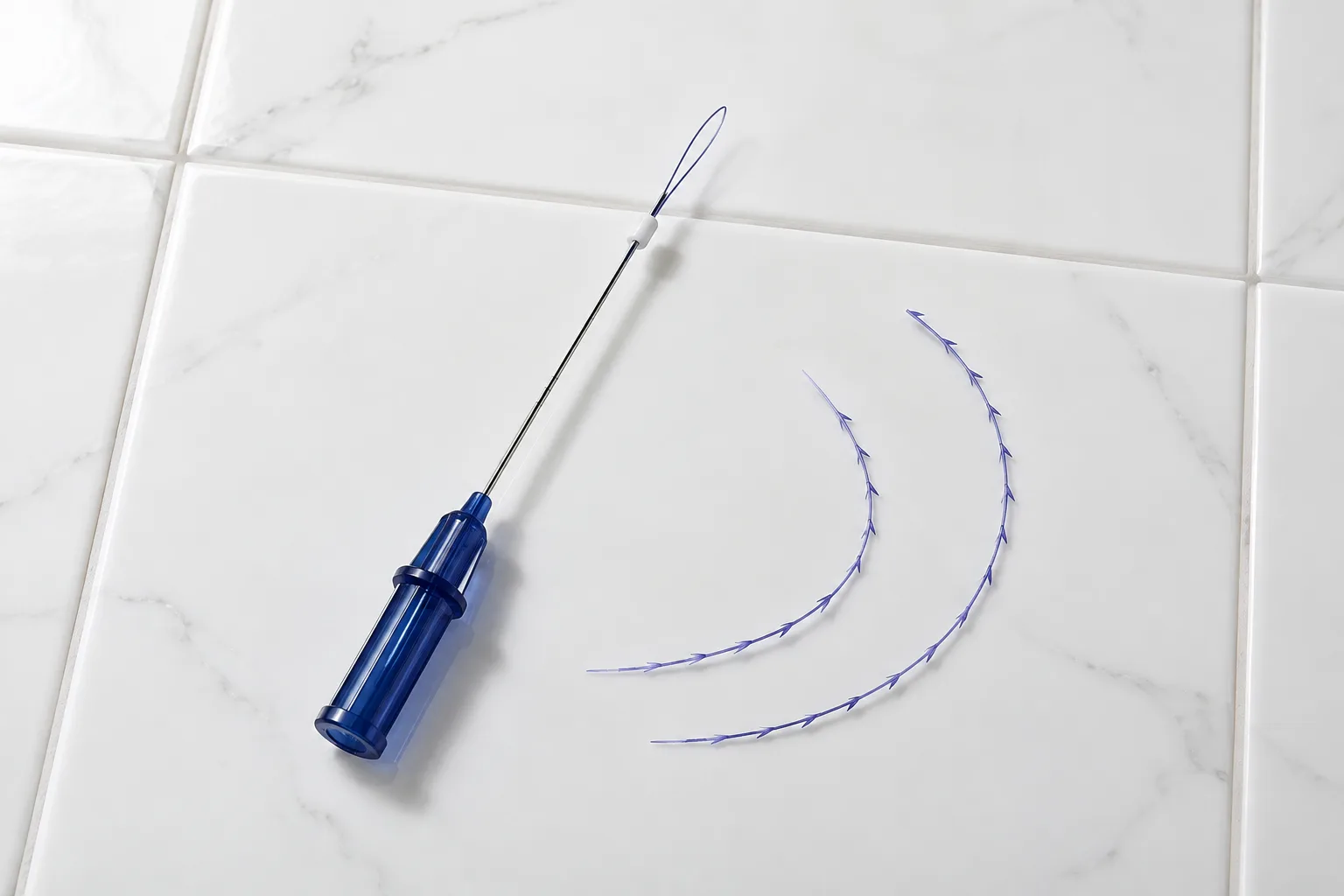
A thread lift places thin, specialised sutures under the skin to support tissue that has started to sag. It is generally described as a less invasive alternative to a traditional surgical facelift. Some product marketing also says threads stimulate collagen production, but the literature treats that kind of claim cautiously.
Medical reviews describe thread lifting as a technique that grew popular largely because patients wanted it, sometimes called a "lunch-time" lift, while strong long-term data lagged behind. For that reason, a careful clinic explains what the threads are intended to do for your face instead of promising a specific outcome.
Miri Clinic describes its approach as a detailed assessment that considers skin condition, skin thickness and overall facial impression, aiming for a natural-looking change and avoiding excess. Which thread, where it is placed and whether threads are suitable at all are decisions made at consultation.
How reliable is the research on thread lifts?
The research is described as limited, and many published studies carry some degree of bias. Systematic reviews have revisited the technique after about a decade and still point to a shortage of rigorous long-term studies.
For a visitor, this has practical consequences:
- Be cautious about any promise of a fixed result or a fixed duration. Outcomes differ from person to person.
- Ask the doctor what the threads are expected to do in your case, and what they are not expected to do.
- Ask what happens if the doctor decides a thread lift does not suit you. A responsible answer may be a different option, or no procedure at all.
The clinic states that it does not put results ahead of process and decides direction carefully after consultation and checks. That is a fair standard to hold any clinic to.
Is a thread lift different from ultrasound or radiofrequency lifting?
Yes. A thread lift places material under the skin, while device-based lifting delivers energy through the skin surface. They are different procedures, and some people discuss both at the same visit.
The clinic's equipment list includes Ultherapy PRIME (ultrasound lifting), Doublo Gold (ultrasound lifting) and 10THERMA (radiofrequency lifting), which are used for lifting and firming concerns without threads. It also lists LDM as a device-care program. Which direction is worth discussing depends on what the doctor sees in person: how much laxity there is, how thick the skin is, where you notice changes and what kind of change you want. The lifting treatments page gives an overview of the category.
What should I ask at a thread lift consultation?
Bring a short list of questions, because the consultation is where suitability is decided. The doctor examines your skin and facial structure, explains the options and says whether a thread lift is appropriate.
- Is a thread lift suitable for my skin thickness and the area that concerns me?
- Would a device-based lift or another approach fit better?
- Which reactions are common after the procedure, and which are unusual enough that I should contact you?
- What follow-up is available, and can it happen while I am still in Korea?
- What does the whole plan cost? Please ask the clinic about pricing directly at consultation.
The clinic says it has an aftercare process built around symptoms that can occur after a procedure, with guidance on recovery. How you recover differs by person, so ask what to expect for you rather than relying on general timelines.
What practical points matter for visitors from abroad?
Plan around the clinic's schedule and your travel dates, and leave room for follow-up instead of treating the appointment as the last item before a flight. Because recovery varies, discuss timing with the doctor before committing.
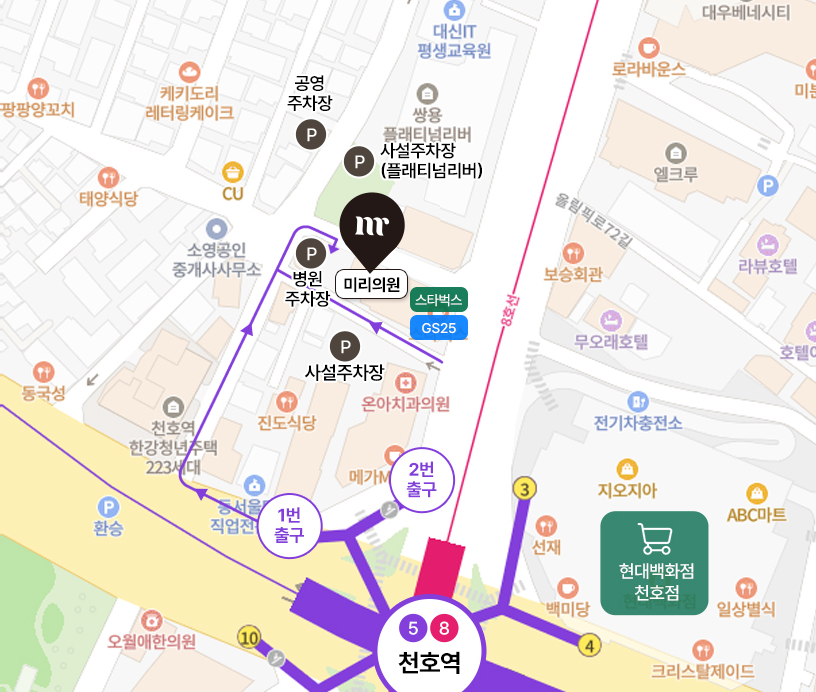
The clinic is in Gangdong, Seoul, near Cheonho Station, in a building in front of exit 2. Hours are Monday, Wednesday and Friday from 10:00 to 19:00, Tuesday from 10:00 to 20:00, Thursday from 14:30 to 20:00 and Saturday from 10:00 to 15:00. It is closed on Sundays and public holidays, with a lunch break from 13:00 to 14:00 except on Saturdays. The clinic's materials mention English and Chinese guidance for foreign residents but do not describe other visitor services, so ask about anything specific before you travel. When you are ready, you can book a consultation through the online booking page.
 Naver Map
 KakaoMap
 Miri Clinic Blog