International patients should know that melasma treatment is usually a gradual, carefully planned process rather than a single quick fix, and that it begins with a close look at your skin. Miri Clinic in Gangdong, Seoul offers melasma treatment as part of its skin and aesthetic care, and its approach is to decide the direction after consultation and examination, not before. You can read the clinic's own overview on the Melasma treatment page.
What is melasma, and why is it considered hard to manage?
Melasma is a pigment condition that shows up as uneven patches on the skin, and it is regarded as challenging because treatment responses can be inconsistent and the patches often return. Recent research suggests it is not only a problem of pigment-producing cells but also relates to long-term sun-related changes in the skin.
Reviews of the topic describe changes in the deeper layers of the skin as well as at the surface, including alterations at the boundary between the layers, changes in small blood vessels, and a higher number of certain immune cells. Light exposure and hormonal shifts are also discussed as influences. In plain terms, this is why melasma is rarely approached as a surface-only issue, and why the same plan does not suit everyone.
The clinic's materials do not list a specific melasma protocol, so details of what is recommended for you are confirmed at consultation.
What does Miri Clinic use for melasma and pigment concerns?
The clinic lists melasma treatment among its procedures and includes RevLite SI (toning) in its equipment, which is the device associated with pigment toning. Which option, if any, fits you is decided by the doctor after assessing your skin.
The clinic's stated approach is to consider skin condition, skin thickness and overall impression together, then explain a direction suited to the individual. It also says it does not put results ahead of the process: the direction is set carefully after consultation and checks. For pigment concerns in general, you can also browse the clinic's Pigment & Mole page, which covers related services.
Because melasma can look similar to other pigment spots, an in-person assessment matters. A flat, small spot and a broader patch may need quite different handling, and the doctor can tell you which you have.
Why do the sun, hormones and light matter to your plan?
Sun and visible light exposure and hormonal changes are both discussed in the research as factors that influence melasma. That is why a clinician will usually ask about your daily routine, sun habits and any hormonal factors, and why day-to-day skin habits are part of the conversation.
For international patients, this has a practical side. If you live in or are travelling from a place with strong sun, or you spend long periods outdoors, tell the doctor. Your usual climate, your skin products and any treatments you have had before can all affect what is suggested. Bring a list of your current skincare products, or photos of them, so the discussion is specific.
Results and recovery differ by person, and no one can promise how your skin will respond. The clinic also notes that it has an aftercare process that takes into account symptoms that may follow a procedure, and that it guides you through the recovery period.
What should you ask at a melasma consultation?
Good questions focus on your skin type, the likely approach, the expected number and spacing of visits, and what follows afterwards. The doctor will set any schedule at consultation, so ask about it directly rather than assuming.
- Is this melasma, or another type of pigment spot?
- Which approach suits my skin condition and thickness?
- How often might I need to return, and can that be arranged around my stay in Korea?
- What should I do or avoid in daily life between visits?
- What reactions are common afterwards, and who do I contact if I have concerns?
Because melasma can relapse, ask what maintenance might involve. If you are only in Korea for a short stay, say so at the start so the plan can be discussed realistically.
Practical details for visitors from abroad
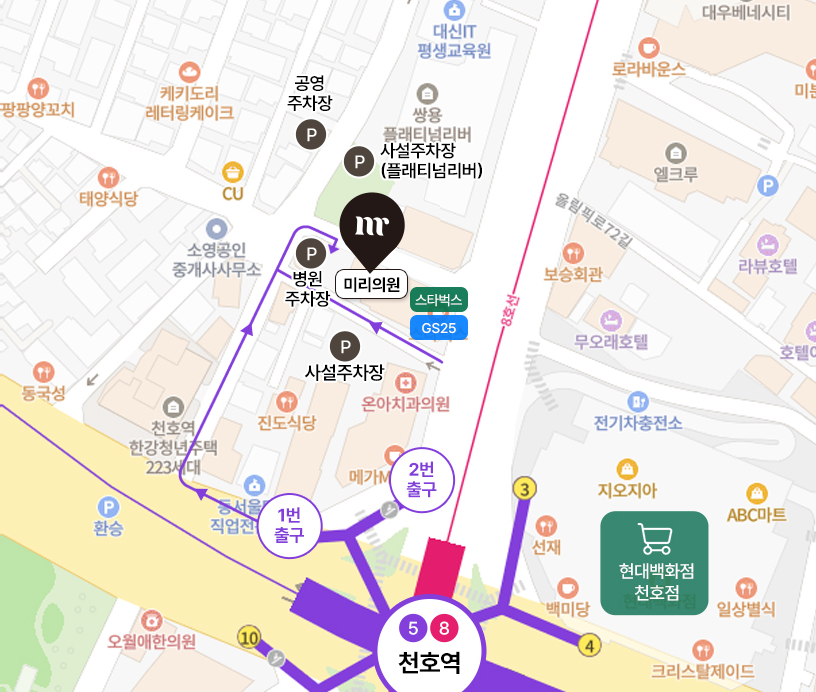
The clinic is in Gangdong, Seoul, in a building by Exit 2 of Cheonho Station, and the clinic's materials describe it as welcoming foreign residents of Korea, with guidance for foreign patients in English and Chinese. Consult the clinic directly to confirm what language help is available for your visit.
Opening hours, as listed by the clinic: Monday, Wednesday and Friday 10:00 to 19:00; Tuesday 10:00 to 20:00; Thursday 14:30 to 20:00; Saturday 10:00 to 15:00. Lunch is 13:00 to 14:00 except on Saturday, and the clinic is closed on Sundays and public holidays. Check the Location & Hours page before you plan your day.
Costs depend on the procedure and are explained at consultation, so please ask the clinic about pricing. When you are ready, you can use Online Booking.
 Naver Map
 KakaoMap
 Miri Clinic Blog